
People always wonder who has the highest IQ in the UK, and whether there is a single, definitive name you can point to.
The problem is that most online claims mix two very different things: verified test results from recognised IQ tests, and estimated scores attached to famous “genius” figures.
In this article, we separate those categories, explain what can actually be verified, and show where the evidence ends and speculation begins.

Highest confirmed IQ in the UK
If you want the most defensible confirmed answer, you first have to understand a simple limitation: some IQ tests cap the highest score you can receive.
When several people reach that cap, the result is a tie at the top of that test, not one clear winner.
On the Mensa Cattell III B test, the maximum published score is 162. In the UK, multiple test takers have been publicly reported as achieving that top score.
Based on that data, the highest IQ in the UK is shared by Rory Bidwell, Ramarni Wilfred, Kashmea Wahi, and Nicole Barr.
In practical terms, that is as close as you can get to a confirmed highest result, because it is based on named individuals and a known test ceiling.
There is an important caveat, though. Hitting 162 on Cattell III B does not prove someone has the single highest IQ overall. It proves they reached the maximum on that particular test scale.
Other tests use different scoring methods, different reference groups, and sometimes different ceilings, so one test’s top score cannot automatically be compared to another test’s top score.
This is why careful articles describe a highest verified result on a specific test, rather than claiming an absolute, undisputed crown across all tests and all people.
Speculation versus verified scores
When people search for the highest IQ in the UK, they usually mean one of two things:
- A verified test score from a recognised, standardised IQ test (often reported in the media when someone joins Mensa).
- An estimate attached to a famous person, based on their achievements, with no public test record.
These are not the same category, and mixing them is where most online “rankings” go wrong.
Highest estimated IQ in the UK
When people discuss the highest IQ in the UK, they often bring up famous British geniuses whose IQ numbers are widely repeated online.
In most cases, those figures are estimates, not publicly documented test results. Modern IQ testing was not available for some historical figures, and even for modern scientists, an official score is rarely published.
So, treat the numbers below as often cited estimates, supported mainly by achievements, not confirmed scores.
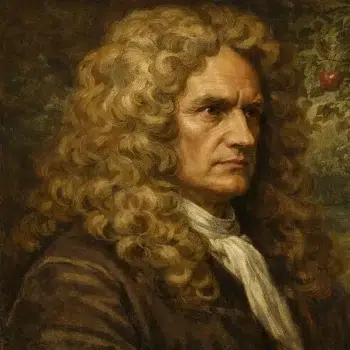
Isaac Newton
Issac Newton is frequently assigned estimates around 190 to 200, but there is no confirmed test score. He helped shape classical physics, developed key ideas in calculus, and wrote foundational work on motion and gravity that influenced science for centuries.
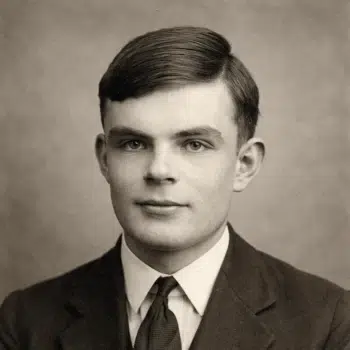
Alan Turing
Turing is often listed at roughly 180, though this is not based on a published IQ test. He laid the foundations of computer science, defined the Turing machine concept, and played a major role in WWII codebreaking at Bletchley Park.
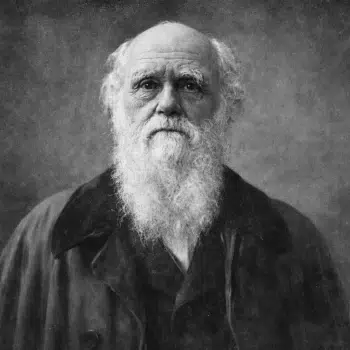
Charles Darwin
Darwin is sometimes cited around 165, but there is no verifiable IQ record. He developed the theory of evolution by natural selection, transforming biology through long-term observation, evidence gathering, and synthesis.
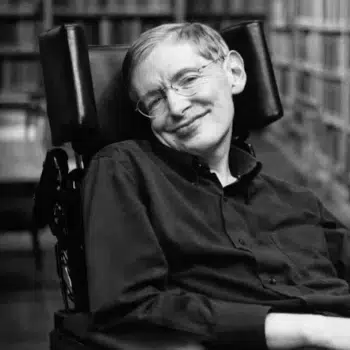
Stephen Hawking
No verified IQ score is publicly available, but he is often described as 160+ based on his reputation. Stephen Hawking was a theoretical physicist and cosmologist, known for work on black holes and Hawking radiation, and for popularising science through A Brief History of Time.
What you can safely say, and what you should avoid saying
You can safely say:
- Some people in the UK have been publicly reported as achieving a top Mensa test score, and multiple individuals can share that result.
- Many famous UK “genius” IQ numbers are not confirmed, because the underlying test results are not publicly documented.
You should avoid saying:
- That one specific person definitely “has the single highest IQ” in the country, unless you can point to a uniquely higher, verifiable score on a comparable scale (which is rarely possible in public data).
Why this topic is harder than it looks
Even if two people both have “162” reported, that does not necessarily mean:
- They took the same test on the same norming,
- the results have the same ceiling rules,
- or that scores are directly comparable across different test formats.
This is why responsible write-ups focus on what can be verified and treat everything else as context.
Related reading
If you want more context before comparing people or groups, these are useful starting points:
- What is IQ (a simple explanation of what the number represents)?
- IQ test scale (how scores are grouped, and why small differences can be overinterpreted).
- Which UK nation has the lowest average IQ (a careful, population-level comparison across England, Scotland, Wales, and Northern Ireland).
Conclusion
If you define the topic as “verified scores that have been publicly reported,” then the best-supported answer is that multiple UK test-takers have reportedly hit the top score (162) on the Mensa Cattell III B test, including Rory Bidwell, Ramarni Wilfred, Kashmea Wahi, and Nicole Barr.
If you define it as “highest estimated IQ,” then you quickly move into uncertain territory, because famous names like Hawking and Newton are usually attached to unverified estimates, not published test results.