
Stephen Hawking is widely regarded as one of the most influential scientists of the modern era. His work in theoretical physics and cosmology helped reshape how we think about the Universe, and it also captured the public imagination far beyond academic circles.
Because of his achievements, people often ask about Stephen Hawking’s IQ. There is no officially verified score, but many sources repeat estimated figures that try to place his intellect on an IQ test scale.
These estimates are usually based on his scientific output and his ability to reason abstractly, rather than on any documented test result.
This article explains what is known about Stephen Hawking’s IQ claims, why the numbers are often repeated, and why they are best understood in context. It also looks at his academic path, major scientific contributions, and the lasting impact of his work.
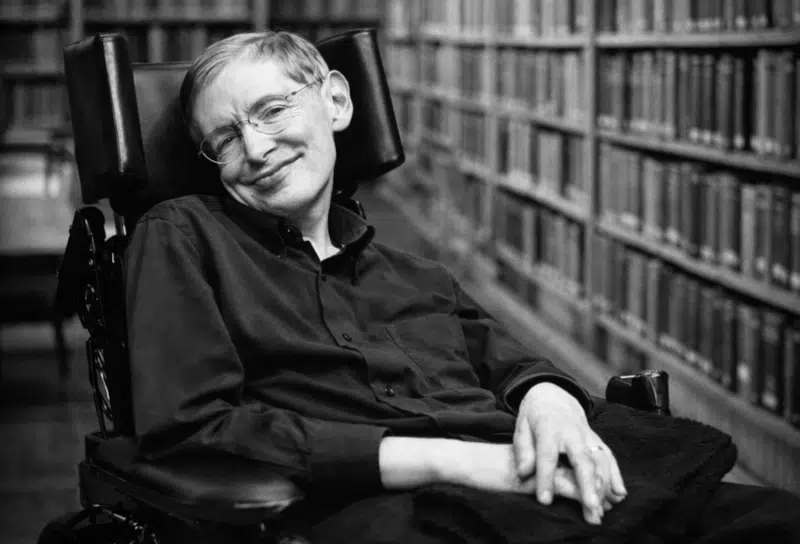
Stephen Hawking’s IQ estimates and context
When discussing Stephen Hawking’s IQ, the key point is simple: no official, publicly released IQ result exists. Hawking did not publish an IQ score, and there is no reliable record of him taking a publicly documented IQ test.
That means statements about Stephen Hawking’s IQ are indirect. They typically come from the interpretation of his achievements, reputation, and the extraordinary level of reasoning required to produce his work.
Even so, a commonly cited estimate is that his IQ may have been above 160.
On a standard IQ distribution, a score above 160 sits in an extremely rare range and is often associated with exceptional abstract thinking, complex reasoning, and rapid understanding of difficult concepts.
These are qualities frequently mentioned when people describe Hawking’s work. For comparison, the average IQ in the general population is around 100, with many people falling between about 85 and 115.
Similar high estimates are often attached to other famous scientists such as Albert Einstein and Isaac Newton, despite the same issue: no confirmed IQ scores.
In practice, these comparisons are mostly illustrative, highlighting the difference between average and extremely high cognitive performance rather than establishing a measurable fact.
It is also important to keep in mind what IQ tests do and do not measure. An IQ score is mainly designed to reflect performance in areas such as logical reasoning, pattern recognition, certain forms of verbal thinking, and mathematical problem solving.
It does not fully capture scientific creativity, originality in forming new theories, long-term persistence, or the ability to push a field forward over decades.
Hawking’s legacy reflects much more than what any single number could represent, which is why Stephen Hawking’s IQ is best treated as a popular curiosity, not a definitive metric of his intellect.
Academic path and scientific achievements
Stephen Hawking was born in 1942 in Oxford, England. He studied Physics at the University of Oxford and later pursued postgraduate work in cosmology at the University of Cambridge.
Early on, he showed a strong interest in fundamental questions about the origin, structure, and evolution of the Universe.
At 21, he was diagnosed with amyotrophic lateral sclerosis (ALS), a neurodegenerative condition that progressively affects muscular function.
Despite this, he continued his academic work and remained scientifically active for decades. His condition shaped many practical aspects of his life, but it did not stop his research, teaching, or his contribution to scientific thinking.
His research focused primarily on theoretical physics, cosmology, and quantum gravity. He paid particular attention to black holes, the early conditions of the Universe, and the relationship between general relativity and quantum mechanics, often bridging different areas of physics within a unified theoretical approach.
Key scientific contributions
One of Stephen Hawking’s most famous contributions is the concept of Hawking radiation. In 1974, he proposed that black holes are not perfectly black and can emit energy as radiation.
This idea emerged from combining insights from quantum theory and general relativity and changed how black holes are understood within modern physics. His work also connects closely to black hole thermodynamics.
Working alongside other researchers, Hawking helped develop principles describing relationships between a black hole’s mass, surface area, temperature, and entropy.
These ideas supported a deeper understanding of physical laws under extreme conditions and remain important in ongoing theoretical research.
Hawking also contributed significantly to theories about the origin of the Universe. His work on singularity theorems strengthened the scientific foundation of the Big Bang framework, supporting the idea that the Universe has a beginning in time.
These results had major implications for cosmology and for how scientists frame fundamental questions about reality.
Impact on science and the public
Stephen Hawking’s influence on modern physics and cosmology is substantial. His ideas inspired further research in areas where different branches of physics intersect, and many current research questions still build on problems he helped shape.
He also played a major role in popularising science. His book A Brief History of Time brought complex concepts to a broad readership and helped grow public interest in cosmology and foundational scientific ideas.
As a public figure, Hawking became a symbol of perseverance and intellectual curiosity. Through media appearances, lectures, and documentaries, he reached audiences far beyond academia.
For many people, his life demonstrated that meaningful intellectual contributions are possible even under extremely challenging circumstances, a perspective that adds depth to any discussion of Stephen Hawking’s IQ beyond the headline number.